Senior engineer since 2012, based in Costa Rica
At the frontier of AI-native development.
I build the tools I wish existed, then ship products with them. Four in the last 18 months, alone, all built with my own open-source agent pipeline: a system where a team and its AI agents plan, build and ship whole releases together, pro audio plugins, a delivery platform and a bookkeeping app its own server can't read.
Four products, the pipeline that built them, and the protocol that started it all.
Designed, built and run by me since Mar 2025. Pick one.
One place where a team builds, maintains and improves its products with AI. Everything runs on releases: it plans them as releases → epics → stories, runs several at once (features, hotfixes, maintenance lines, release candidates) in isolated git worktrees, merges only on green CI, and tags and publishes each release for you.
- Designed a hierarchy of specialized agent threads: an Architect that plans each release and tracks the releases it depends on, a release agent that follows the plan, runs six release checks as sub-agents with explained verdicts and triages failed stories, and a foreman per story that runs analyst → implementer → auditor → documenter. Teammates (designers included) and agents work in the same threads, agents message each other about overlapping files, and everything waiting on a person lands in one Needs you list.
- Built tiered autonomy from Supervised to Unattended: every agent runs fenced in a sandbox, and unattended stories have their own agent grant or deny access requests against the story's spec and plan, while secrets and whole-fence requests always escalate to a person, each grant is logged and revocable, and releases stop at spend and time limits.
- Built the parallel execution engine and review: per-story git worktrees across repos, merges only on green CI through conflicts and partial failures, 14 reviewer types across Claude and Codex, and a judge with its own jury, called with @judge, that researches and weighs options head-to-head.
The team
Needs you
approvals, access requests and questions, in one list
Architect
plans each release and tracks the releases it depends on
Releases, in parallel
2.4.0
feature release
3 stories buildingrelease agent · six checks · triage
story agents ×3
2.3.1
hotfix
checks 5 of 6release agent · six checks · triage
story agent ×1
1.9.4
maintenance line
tagged and publishedrelease agent · six checks · triage
shipped
Each story
- Analyst
- Implementer
- Auditor
- Documenter
a foreman per story, in its own worktree and PR, with 14 reviewer types across Claude and Codex
Each level has its own rails
- Architect
- plans need a person's approval
- Release
- six checks with explained verdicts; spend and time limits
- Story
- fenced sandbox; access judged against the spec; merges only on green CI
- Every agent
- sees only the tools its run was granted
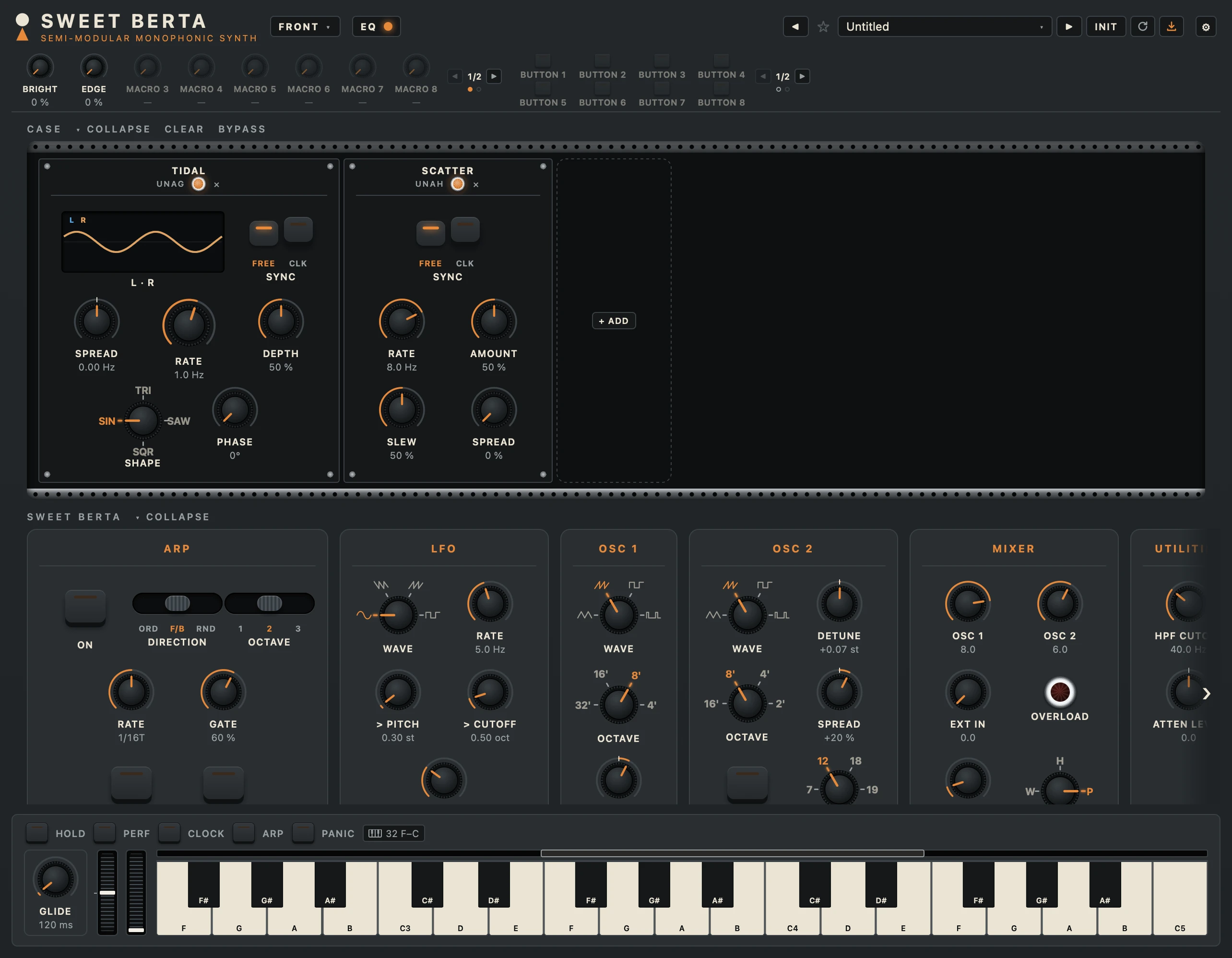
A semi-modular analog mono synth (Sweet Berta), a rack that chains up to 64 effect units with its own standalone audio-interface mode (OA Effects), and every effect unit as its own pedal plugin. AU, VST3, LV2 and standalone on macOS, Windows and Linux, plus the store, licensing and installer around them.
- Wrote the DSP from scratch in a header-only, framework-free library: 2/4/8× oversampling with latency reported to the host, first- and second-order antiderivative antialiasing (including a delay-compensated stage inside a nonlinear ladder filter's feedback loop), PolyBLEP oscillators and an oversampled spring reverb.
- Architected one plugin shell shared by 39 effect units and three products, with React panels in native WebViews and a lock-free triple buffer between UI and audio threads.
- Turned taste into a tool: set the bank's targets by ear and research, then built the measurement that encodes them (an offline level binary reading sample/true peak and BS.1770 loudness, every macro pushed alone and together, sharded across machines), so agents can design new presets that fit and prove it. Aliasing, pluginval and soak runs gate releases.
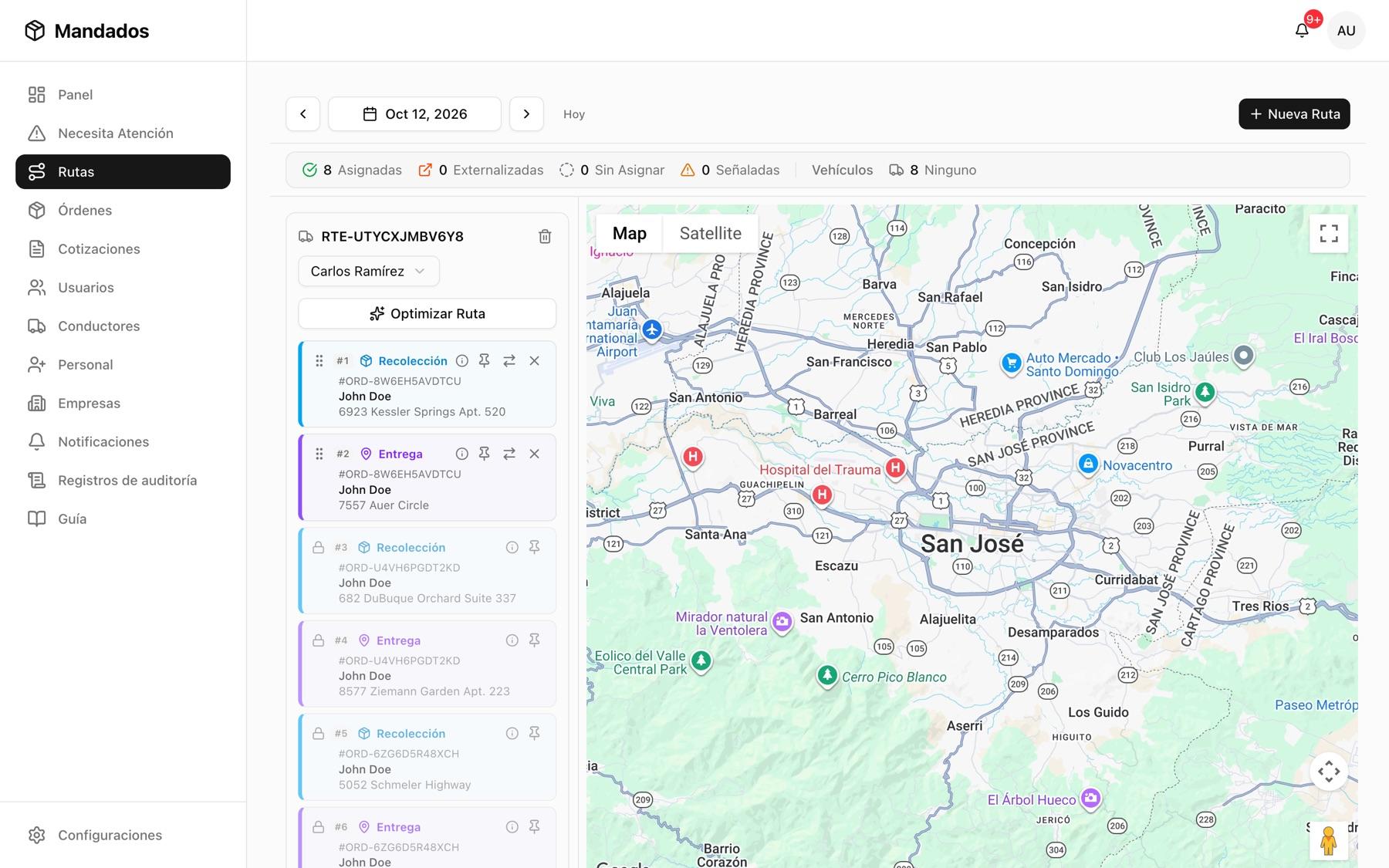
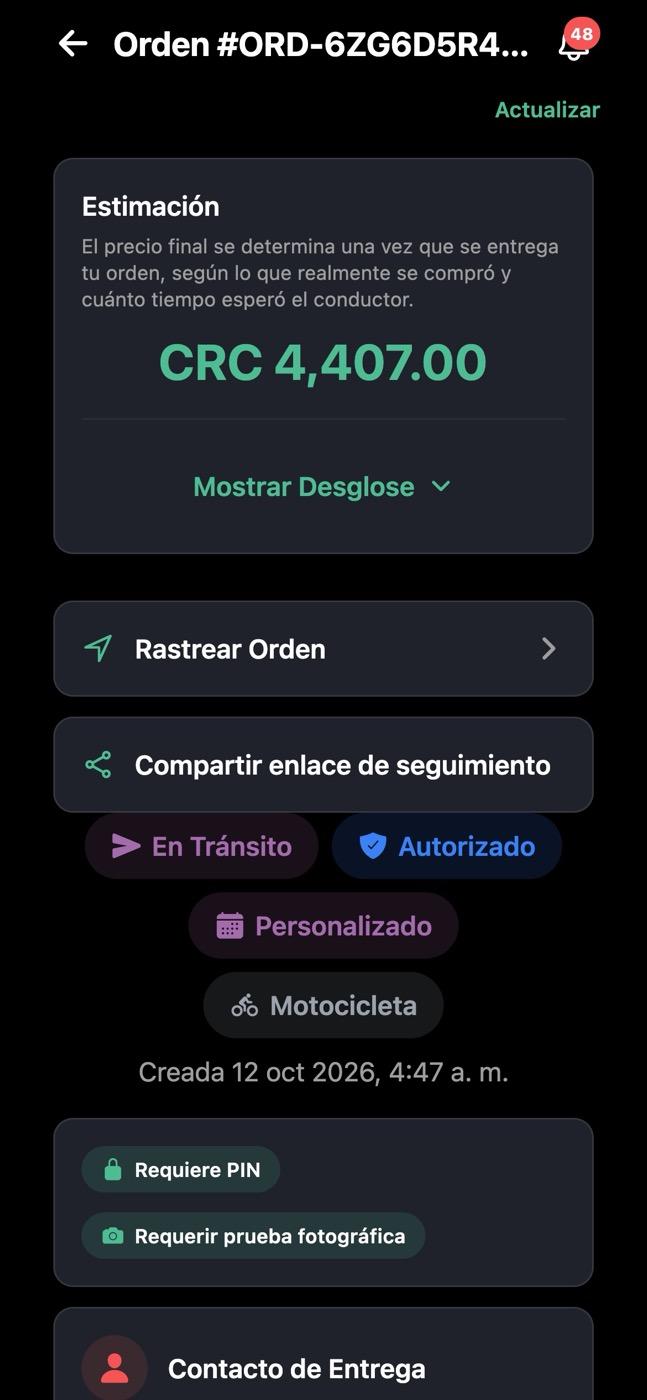
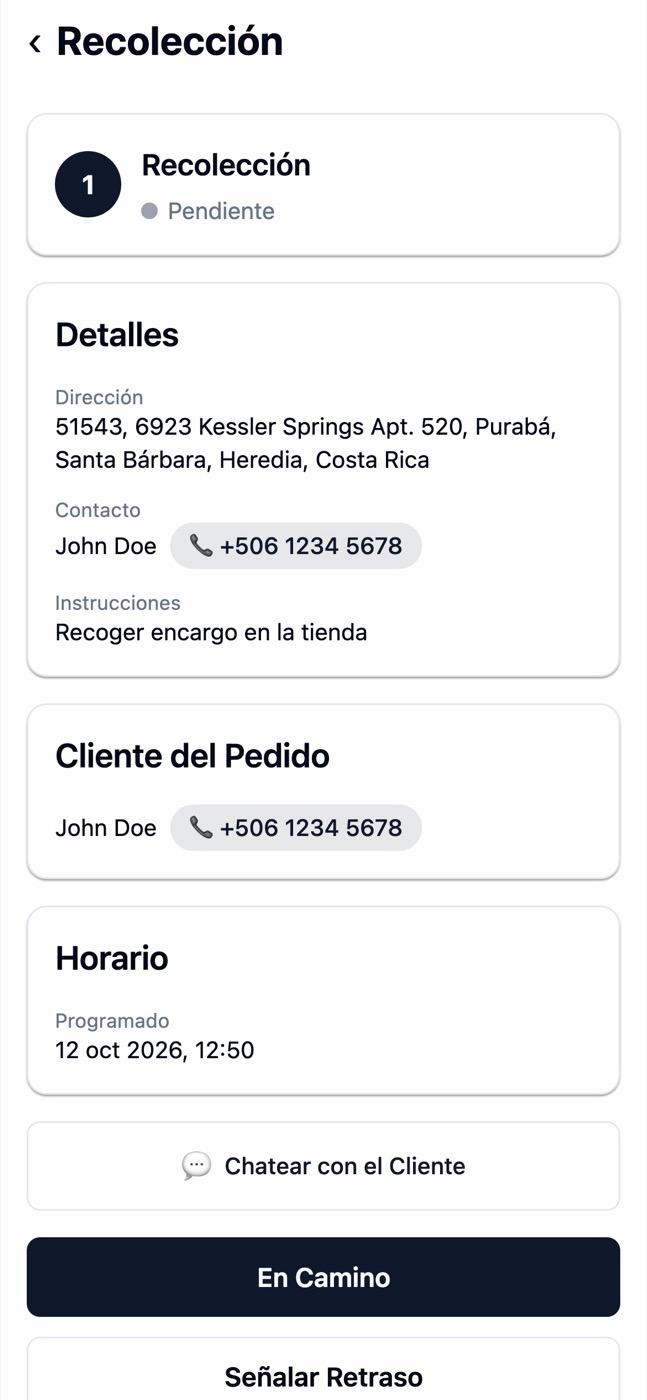
Errands, shopping and courier work in Costa Rica for individuals, hotels and businesses, run by salaried drivers.
- Built the full product: Laravel 12 / PostGIS API, Next.js admin, React Native client and driver apps (iOS, Android and web), real-time updates via Reverb and push via FCM; ~8,900 tests.
- Designed automatic dispatch as bin-packing: feasibility checks, driver ranking by distance rings, insertion simulation within time windows, and cascading re-dispatch when a window overflows.
- Built the payments lifecycle behind a provider contract: saved cards, reconciling quote vs. actual route into automatic surcharge or refund, and debt collection.
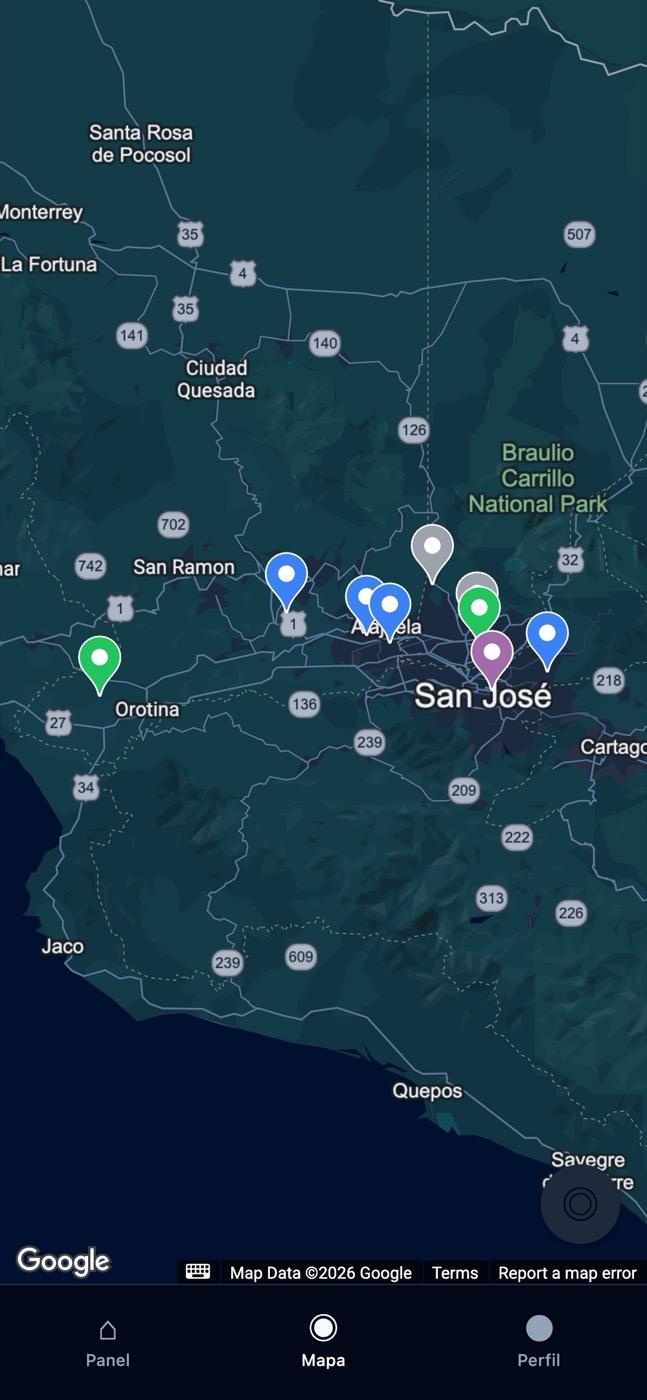
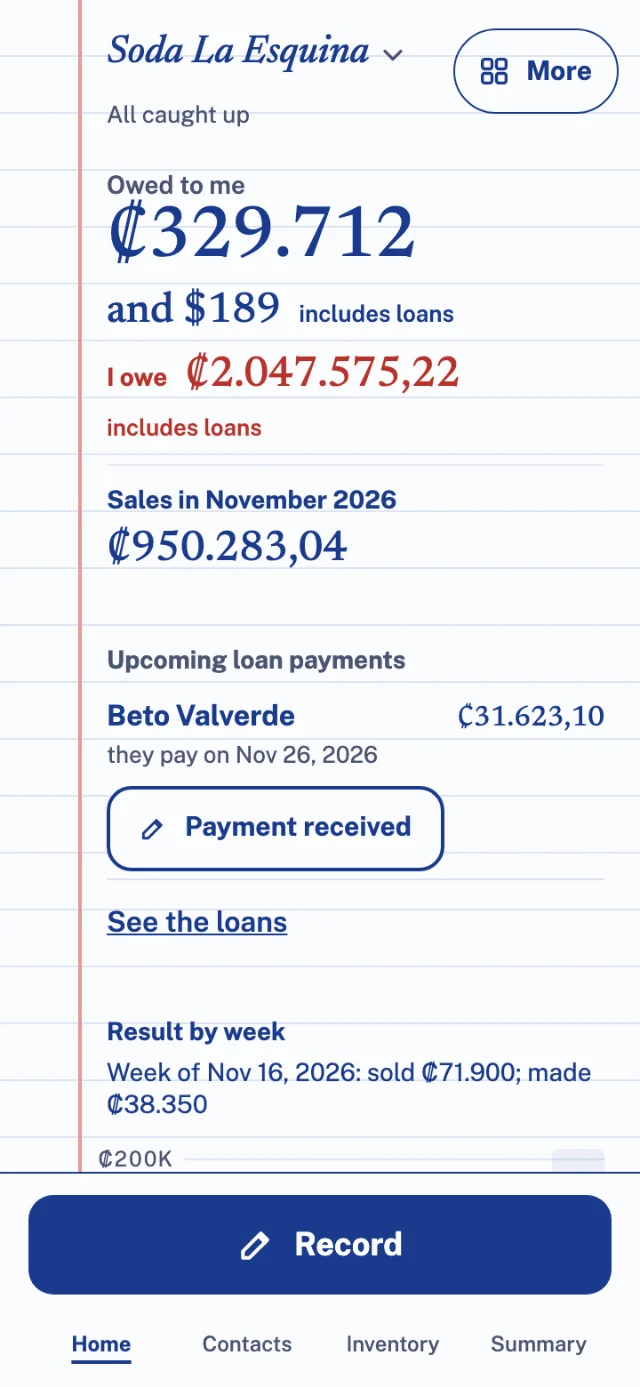
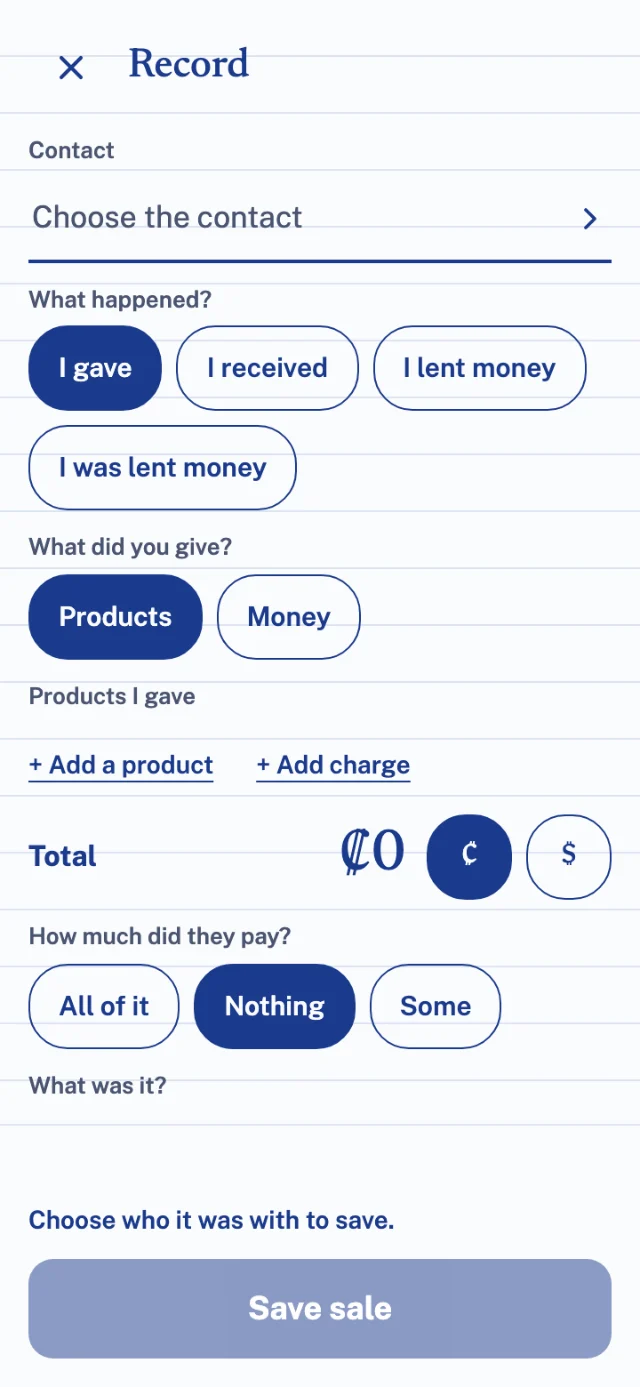
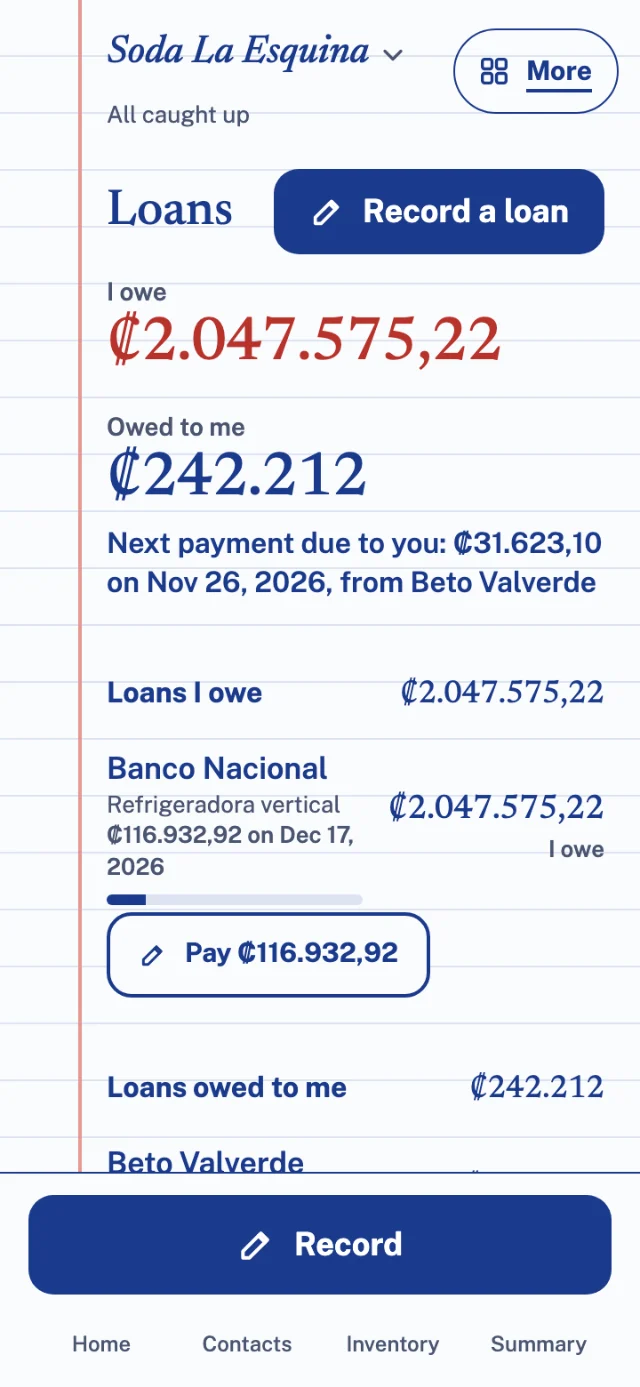
Phone-first bookkeeping for small businesses across Latin America, Spain and Portugal, in Spanish, Portuguese and English (sales, stock, debts, loans); the server only ever sees ciphertext.
- Designed the cryptographic protocol on libsodium/WebCrypto (X25519, Ed25519, XChaCha20-Poly1305, Argon2id): a hash-chained commit log devices refuse to fork, a signed role roster from a pinned genesis hash, and per-role compartments the server can withhold; revoking a member forces key rotation.
- Any home currency, with live rates from central banks and local sources (ECB, Brazil's PTAX, Argentina's and Venezuela's parallel rates); offline-first on encrypted SQLite in WASM. Shipped 1.0 two weeks after the first commit; ~3,000 tests.
The agent pipeline behind everything on this page. An idea is settled, written up as a grounded plan, then run as a loop: check the next piece against the code, build it in isolated worktrees, review and gate it, and re-plan what's left.
- Born while building Trinity. For the first months I built Trinity without it, until I saw its workflow could live in a skill: Trinity's benefits before Trinity could run itself, with none of the setup. Pre-dogfooding. I've built everything with it ever since, Trinity included, and Trinity 0.7 took in everything the pipeline and I learned.
- Public on GitHub as a plugin for both Claude Code and Codex: over 1,100 commits since June 2026, now at v5.28.
- It learns from its own runs: a run can report what went wrong back to the plugin's repo as an issue. Reports peaked at 238 in September, the rocky middle, and November has five so far.
/co-think
Settle the shape of an idea
/write-issue
Write it up as a grounded plan
/orchestrate, until the plan is empty
ground
Check the next piece against the code
execute
Build it in isolated git worktrees
review
Review, gate and merge it
reconcile
Re-plan what's left from the new tree
The Bitcoin Asset Protocol: a coordination layer that anchors typed event logs into Bitcoin, so assets, governance and proofs inherit its finality, with sats as the only currency and no new token.
- Designed it end to end and wrote the white paper (October 2025): an event machine where everything is a typed event, split into STATE (who owns and controls what) and AUX (votes, recoveries, timelocks), and an always-conclude rule so every process ends in exactly one SUCCESS or FAIL.
- Consensus as useful work: bonded nodes pre-validate, attest, sequence and anchor Merkle roots into Bitcoin; Taproot bonds are slashed for provable misconduct and redistributed, not burned. A treasury held by a rotating FROST quorum behind one Taproot key, with fees and rewards settled over Lightning.
- Started building it in Rust, and paused it: a protocol this interdependent needed a better way to build with agents than the loop I had. Trinity is that system, and BAP is what it's for.
- 1Submita user signs a typed JSON event
- 2Pre-validatea gateway checks schema, signature and nonce
- 3Validatepeer validators confirm it in the mempool
- 4Sequencesequencers order events into a block
- 5Attestvalidators re-check the block and sign
- 6Anchorthe block's Merkle root goes into Bitcoin
- 7Concludeagents close each process: SUCCESS or FAIL
Bitcoin
finality, paid in sats; no new token
Fourteen years of shipping
2025 – now
Founder & Sole Engineer, Independent
Four products designed, built and run on my own: Trinity, Ozner Audio, Mandados and Kuentas.
2020 – 2026
Team Lead & Lead Developer, Broccoli Studios
Led Broccoli's team on Costa Rica's national education platform for 1M+ students and educators (React/TS, C#/.NET).
- Team lead and lead developer for a cross-functional team of 5–6 (developers, designers, technical writers): planning, code review, mentoring and production releases.
- Single point of contact with the ministry, end to end: requirements with MEP leadership and analysts, specifications and API contracts, test scenarios and acceptance testing, deliverables and sign-off. Owned the documentation suite and authored much of it (specs, user manuals, release notes).
- Delivered 8+ major modules, including a SurveyJS forms engine with versioning and snapshots that replaced paper workflows, and hierarchical permissions across national, regional and institutional levels.
2016 – 2020
Career break — Family caregiving
- Primary caregiver for a parent, alongside small freelance web projects. Kept learning throughout: picked up modern JavaScript and React and studied software design and architecture patterns in depth.
2012 – 2016
Full-Stack Developer, NurseRecruiter
- Proposed replacing the company's in-house PHP framework with Laravel, then rewrote the entire platform with the lead developer as a two-person team: accounts, job posting, recruiter dashboards, resume management, search and messaging.
- Rebuilt the matching system at the core of the platform: algorithms pairing nurses with hospitals and recruiters by location, job type, specialty and more, with schemas and queries redesigned to keep it fast. Worked directly with the founders on architecture and product.
Writing
22 engineering posts on agent orchestration, encryption, testing, performance and architecture, on the Trinity blog.
Your test suite is a tax: we cut 57,600 tests to 3,030
Agents write tests faster than product. We cut our gate from 57,600 tests to 3,030 and 24 minutes to 5, and drew a line for what earns a test.
Run Dozens of AI Agents on One Machine — No Meltdown
Inside the throttle that lets five agents per person, per project, each spawning sub-agents, share one machine.
The Ralph Wiggum Loop, evolved
Why a bash loop of agents broke on a hard protocol project, and the plan-first, collaborative pipeline that replaced it.
How Solid + Vite + Hono cut Trinity's cold launch 37%
Rewriting the desktop app from Next.js + React: 37% faster cold launch, 33% smaller bundle, 19% less idle memory.
Why Trinity runs on Effect: typed errors, supervised agents
Typed errors and supervision make an autonomous pipeline fail loudly, never silently.
End-to-end encrypted secrets: your keys, your devices
Keys stay on your devices; the server holds only ciphertext.
Cheap Diagnostics, Expensive Assumptions
Cutting the dev toolchain up to 10× — and why git worktrees made being wrong cheap.
Overthinking systems: I built four, a file was enough
A confession about building systems for things a repo already does.